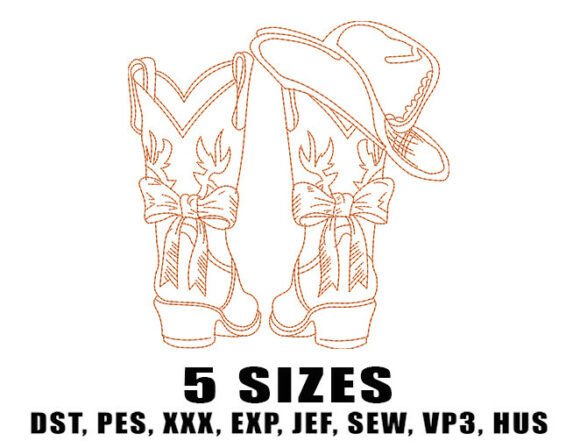
Cowboy Boots and Hat Line Art Embroidery Design
As an embroidery designer who has spent years translating digital concepts into tangible, stitched reality, I approach every new machine embroidery design with a critical eye. We aren't just looking for pretty pictures; we are looking for commercial viability, stitch efficiency, and brand impact. When evaluating the Cowboy Boots and Hat Line Art Embroidery Design, my focus is strictly on how this asset performs in a small business context. This review breaks down why this specific embroidery file is a strong contender for branded merchandise, staff uniforms, and handmade product lines.
First Impressions: The Visual Personality of the Design
The moment you load the Cowboy Boots and Hat Line Art Embroidery Design into your digitizing software, the aesthetic speaks volumes. The description highlights an elegant outline of classic cowboy boots standing side-by-side, with a matching hat resting on the right boot. This composition immediately signals a blend of rustic charm and refined simplicity. It is not overly busy or cluttered, which is a massive advantage for production.
For brands aiming for a premium, handmade feel, this line art style works exceptionally well. It feels professional yet friendly, avoiding the cartoonish look that can sometimes plague western-themed designs. The use of outlines rather than heavy fills suggests a lighter touch, which translates to softer fabric hand-feel—a crucial detail for high-end apparel. It strikes a balance between being decorative and functional, making it suitable for everything from a boutique clothing label to a local café’s apron branding.
Real-World Business Applications
The true test of any digital embroidery file is its versatility across different product categories. Here is how the Cowboy Boots and Hat Line Art Embroidery Design performs in actual small business scenarios:
- Embroidered Patches: This design is ideal for creating custom patches. The clear outline structure allows for clean edge stitching (likely satin stitch around the perimeter). These patches can be sewn onto denim jackets, backpacks, or tool bags, adding instant value to small business merch.
- Staff Uniforms and Aprons: For bakeries, florists, or boutiques with a western or rustic theme, this design serves as a perfect chest logo accent. It is recognizable even at smaller sizes, helping to build brand identity among customers without overwhelming the garment.
- Cap Embroidery: The vertical stacking of the boots and hat makes this design naturally suited for the front panel of a baseball cap or trucker hat. It fits standard hoop constraints well and offers a bold focal point for custom apparel.
- Tote Bag Design: A single embroidered mark on a canvas tote bag elevates the perceived value of the item. Using this design on reusable shopping bags or gift bags helps reinforce visual consistency for crafters and Etsy sellers.
- Product Packaging Accents: Beyond textiles, this design can be used to create custom woven labels or printed tags that mimic the look of embroidery, ensuring your handmade product presentation is cohesive from shelf to home.
Strategic Brand Impact
In the world of e-commerce and local retail, trust is built through professionalism. A poorly executed embroidery job can detract from a great product, but a well-stitched design enhances it. The Cowboy Boots and Hat Line Art Embroidery Design contributes positively to brand identity by conveying authenticity and craftsmanship.
When customers see consistent, high-quality branding on multiple touchpoints—such as a cap, a tote, and an apron—they perceive the business as established and reliable. This design supports visual consistency because its line-art nature is adaptable. Whether stitched in white thread on black denim or navy thread on beige canvas, the core message remains clear. This adaptability boosts buyer engagement because the design feels intentional and curated, rather than generic.
Where to Exercise Caution
While this design is versatile, no commercial embroidery project is without its challenges. As a designer, I advise caution in the following areas:
- Small Patch Sizes: If you plan to scale this design down to less than two inches, the details of the hat brim and boot shafts may become muddy. Always test at final size before bulk production.
- Curved Surfaces: While good for flat caps, applying this to highly curved items like helmet sides or rounded containers requires careful hooping techniques to prevent distortion.
- High Stitch Density: Although described as line art, ensure the digitization does not use excessive underlay stitches. Too much density can make the fabric stiff and uncomfortable, especially on lightweight tees or delicate fabrics.
- Fabric Texture: On heavily textured fabrics like burlap or thick wool, the fine lines might get lost. This design shines best on smooth cottons, denims, and poly-blends where the thread can lay flat.
- Dark Uniforms: Ensure you have sufficient contrast. Light threads on dark backgrounds work best, or vice versa. Poor thread colors choice can render the design invisible.
Practical Designer Notes for Production
Before you commit this design assets to your production line, follow these essential steps to ensure a successful finished product:
- Test in Black and White: Convert the design to monochrome first. This helps you evaluate the balance and spacing of the elements without the distraction of color.
- Check Hoop Size: Confirm that the hoop size required by the file matches your available equipment. Ensure the bounding box allows for proper placement on your chosen garment.
- Review Thread Contrast: Select thread colors that pop against your target fabric. Test both light-on-dark and dark-on-light combinations.
- Inspect Spacing: Zoom in on the digitized file. Are the gaps between the boot laces and the hat brim too narrow? Adjust if necessary to prevent thread breaks during stitching.
- Test on Real Fabric: Never trust a screen mockup alone. Stitch the design on the actual fabric type you will use for production. Check for puckering or shifting.
- Use Proper Stabilizer: The choice of stabilizer (cut-away vs. tear-away) is critical. For stretchy knits or heavy denims, a cut-away stabilizer is usually recommended to maintain integrity over time.
- Create a Printable Mockup: Use the design to generate a printable mockup for client approval. This allows you to visualize the final result in a realistic setting before investing in materials.
- Confirm Commercial Licensing: Most importantly, verify the licensing terms. Ensure you have the right to use this embroidery file for resale purposes. Selling items with unauthorized designs can lead to serious legal issues.
Final Verdict
The Cowboy Boots and Hat Line Art Embroidery Design is a robust, commercially viable asset for any entrepreneur in the apparel, accessories, or lifestyle space. Its elegant line-art style ensures it remains timeless, while its structural simplicity makes it forgiving during the digitization and stitching process. By paying attention to fabric selection, stabilizer usage, and proper scaling, you can leverage this design to create high-value merchandise that resonates with customers. It is more than just a picture of boots; it is a tool for building a recognizable, trustworthy brand presence.