Bunny Ears Embroidery Design Review
As an experienced embroidery designer, I spend my days evaluating digital assets for their viability in commercial production. When a new file lands on my desk, I am not just looking at the artwork; I am analyzing its stitch density, scalability, and potential impact on brand identity. Today, I am reviewing the Bunny Ears Embroidery Design, a piece categorized under Woodland Animals that promises to be a versatile asset for small business merchandising. This review focuses on how this design performs when translated from a digital screen to physical branded merchandise, patches, and custom apparel.
First Impressions: Visual Personality and Professional Appeal
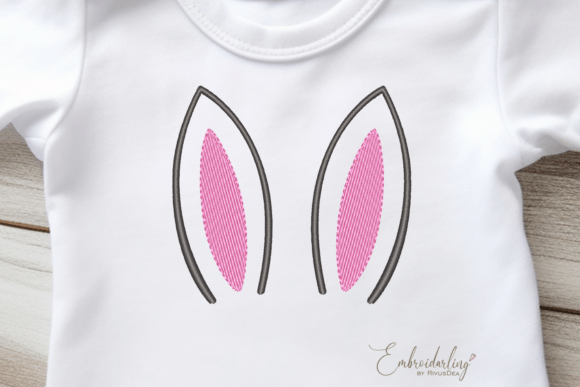
The Bunny Ears Embroidery Design immediately strikes me as playful yet structured. The description highlights it as a "Cute Bunny ears embroidery design" with a focus on the pattern itself rather than a full character portrait. This is a crucial distinction for business owners. By isolating the ears, the design becomes more abstract and adaptable, allowing it to fit seamlessly into various brand identities without overwhelming the logo or text.
In terms of visual personality, the design feels modern and clean. It avoids the overly intricate, cluttered look that can sometimes plague Easter-themed embroidery files. Instead, it offers a bold, recognizable silhouette that reads well even from a distance. For a handmade brand or an Etsy seller, this level of clarity is essential. It suggests a premium, thoughtful approach to branding rather than a generic clip-art aesthetic. The design balances friendliness with professionalism, making it suitable for everything from a boutique bakery’s aprons to a creative studio’s tote bags.
Real-World Business Applications
The true test of any embroidery file is its performance in real-world applications. The product description notes that it includes two sizes, which best suit for t-shirts, but its utility extends far beyond basic apparel. Here is how the Bunny Ears Embroidery Design can elevate specific business categories:
- Embroidered Patches: This design is ideal for creating iron-on or sew-on patches. Because the motif is contained within the ears, it translates beautifully onto circular or square patch backgrounds. Small businesses can use these as badges on denim jackets, backpacks, or client gift items, adding a touch of whimsy that encourages social media sharing.
- Staff Uniforms and Aprons: For cafes, bakeries, or florists, uniformity is key. Placing the Bunny Ears Embroidery Design on the chest of a work shirt or the pocket of an apron adds a subtle brand accent. It signals a friendly, approachable customer service experience without being distracting. The design’s simplicity ensures it remains legible even on busy kitchen environments.
- Cap Embroidery: Headwear is a staple of promotional merchandise. The vertical nature of bunny ears makes them naturally suited for cap fronts or side panels. Whether used for a seasonal Easter promotion or as a year-round woodland theme, the design stands out against the curve of the hat, offering high visibility for brand recognition.
- Tote Bag Design: Canvas totes are excellent canvases for commercial embroidery. The ears can be placed centrally for a statement piece or repeated along the bottom hem for a patterned effect. This adds value to the product, transforming a simple bag into a branded accessory that customers are proud to carry.
- Product Packaging Accents: Beyond apparel, this design can be embroidered onto fabric labels attached to handmade goods. A small ear motif on a tag attached to a knitted scarf or a wooden toy reinforces the handmade product narrative and enhances perceived quality.
Strategic Considerations for Production
While the Bunny Ears Embroidery Design is visually appealing, there are technical constraints that designers must respect to ensure a polished finished product. Not all surfaces are created equal, and certain applications require careful planning.
When using this design for small patch sizes, attention to detail is paramount. If the ears are too thin or the negative space is too tight, the embroidery may pucker or lose definition. I recommend testing the smallest size variation on the actual fabric intended for use. Curved surfaces, such as caps or sleeves, also pose challenges. The design must be digitized or positioned to account for the curvature, ensuring the ears do not appear distorted or stretched.
Thread color contrast is another critical factor. On dark uniforms or textured fabrics like heavy canvas, lighter thread colors might get lost. Conversely, dark threads on light fabric need sufficient coverage to avoid showing the base material through the stitches. Always inspect the spacing between the ear shapes to prevent thread breaks or tangling during high-speed machine embroidery.
Impact on Brand Identity and Customer Trust
Embroidery is a tactile medium. Customers can see and feel the quality of the stitching, which directly influences their perception of your brand. A well-executed embroidered patch or logo conveys durability and care. Using the Bunny Ears Embroidery Design strategically can enhance brand identity by associating your products with creativity, nature (via the Woodland Animals category), and attention to detail.
Consistency in design assets builds trust. If you use this motif across multiple touchpoints—caps, aprons, and packaging—it creates a cohesive visual language. This visual consistency helps customers recognize your brand instantly. Furthermore, the playful yet refined nature of the design can increase buyer engagement. People are drawn to unique, handcrafted aesthetics, and seeing a high-quality embroidery design on your merchandise signals that you invest in the quality of your offerings.
Practical Designer Notes for Implementation
To ensure the Bunny Ears Embroidery Design meets professional standards, follow these practical steps before committing to bulk production:
- Test in Black and White: Convert the design to monochrome to check its structural integrity. If the design looks cluttered or weak in black and white, it will likely struggle in color.
- Check Small Patch Viability: Zoom in on the smallest size included in the download. Ensure that the details remain distinct and that there is enough space between stitches to prevent merging.
- Review Thread Color Contrast: Select thread colors that offer strong contrast against your target fabric. High stitch density requires careful color selection to maintain clarity.
- Inspect Spacing and Hoop Size: Confirm that the design fits comfortably within your standard hoop sizes. Uneven spacing can lead to tension issues and puckering.
- Test on Real Fabric: Digital previews are helpful, but only a physical sample reveals how the design interacts with the fabric texture and stabilizer. Use the appropriate stabilizer for your fabric type to support the stitches.
- Create a Printable Mockup: Before producing inventory, create a mockup to visualize the design on the final product. This helps in client approval processes and marketing materials.
- Confirm Commercial Licensing: Verify that the digital embroidery file license allows for commercial use on merchandise you intend to sell. The description mentions "commercial use," but always double-check the specific terms to protect your business.
In conclusion, the Bunny Ears Embroidery Design is a strong candidate for small business merchandising. Its clean lines, adaptability, and playful charm make it suitable for a wide range of applications, from staff uniforms to branded accessories. By following proper embroidery techniques and considering the practical aspects of production, business owners can leverage this design to enhance their brand identity and deliver high-quality, memorable products to their customers.